
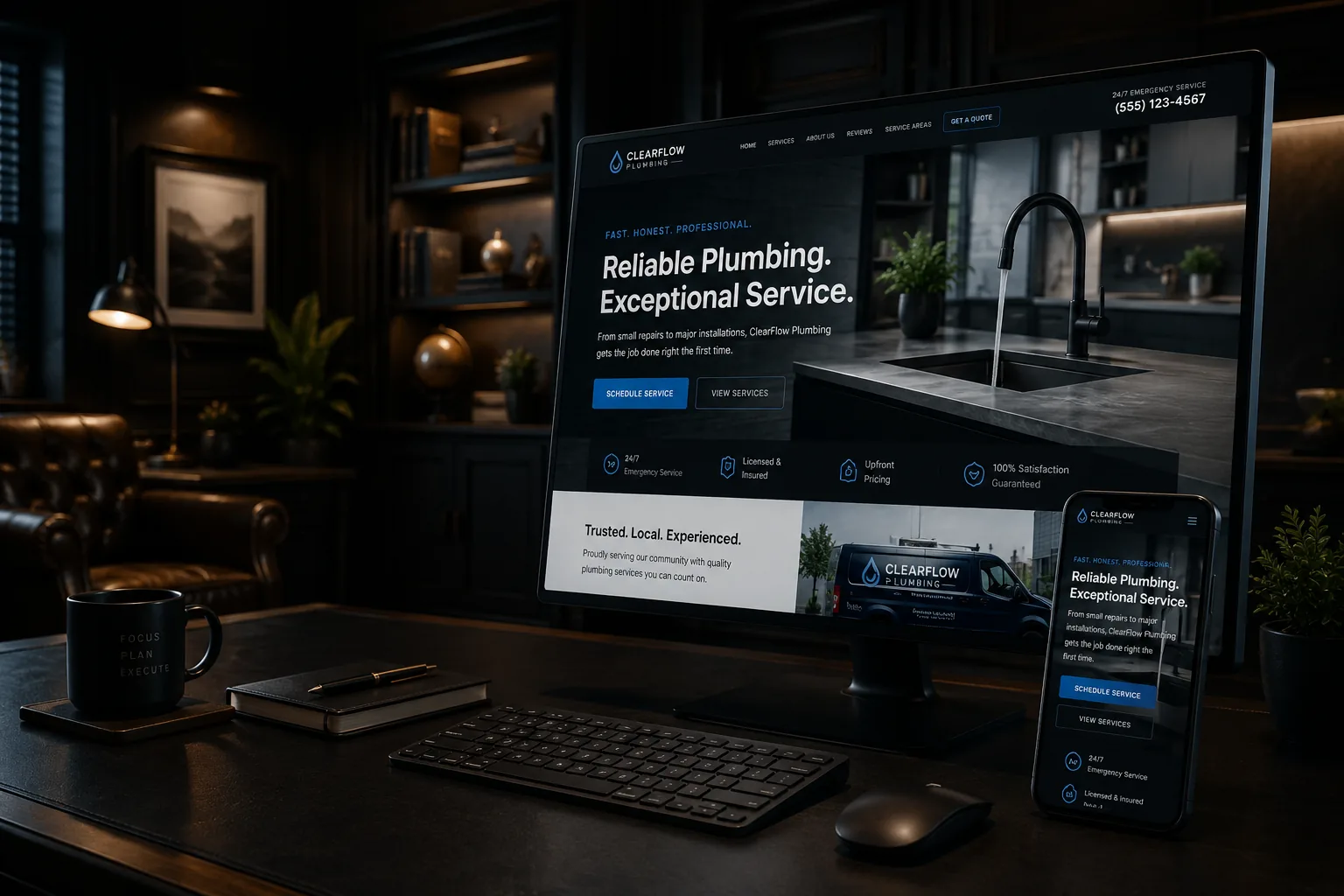
A small-business website can be a low-cost DIY subscription, a template configured by a freelancer, a custom local build, or a complex agency project. Those options are not interchangeable, so a universal price range can create more confusion than clarity.
The better approach is to define the job, separate one-time and recurring costs, and compare the total operating model. A lower build fee can be reasonable for a smaller scope. A higher fee can be justified by research, writing, migration, integration, or support. Neither price proves quality by itself.
Scope is the first cost driver
Page count matters, but page purpose matters more. Ten pages built from supplied copy differ from ten pages that require interviews, search research, writing, project-photo organization, accessibility review, and multiple approval rounds.
- How many distinct services need useful pages?
- Are regional pages necessary and genuinely supportable?
- Will existing content be kept, rewritten, combined, or migrated?
- Does the site need forms, scheduling, payments, ecommerce, membership, donations, or portals?
- Who supplies brand assets, photography, policies, and subject-matter review?
Strategy and discovery
A simple project may need one planning conversation. A more important site may require stakeholder interviews, audience research, content inventory, competitive review, analytics analysis, and conversion planning. This work can prevent expensive rework, but only if the recommendations are actually used.
Copywriting and content production
Good website copy is not filling boxes in a template. It translates the business into language customers understand, defines services accurately, addresses objections, and leads to the next step. Costs rise when the writer must interview experts, verify technical details, write many distinct pages, or coordinate approvals.
Photography, video, diagrams, downloadable resources, and project stories are separate work. Reusing supplied images can reduce cost; organizing hundreds of unlabeled files can increase it.
Design and development
Template configuration, custom visual design, and custom software solve different problems. A local service site may benefit more from clear information and fast mobile use than from custom animation. Custom development is appropriate when the business needs a workflow that established tools cannot handle safely or efficiently.
Ask which parts are custom, which use licensed components, and which require ongoing subscriptions. Complexity should have a business reason.
SEO foundation
A build may include page titles, headings, internal links, indexability settings, redirects, sitemaps, structured data, Search Console connection, and content planning. Ongoing SEO is different: it may involve continuous profile management, content improvement, review processes, authority building, and measurement.
The phrase SEO included is too vague. Request the actual tasks and deliverables. No build fee guarantees rankings.
Accessibility and quality assurance
Accessibility work may include semantic structure, keyboard navigation, focus visibility, labels, contrast, text alternatives, error handling, target sizes, and testing. WCAG 2.2 is the current W3C recommendation. Automated scans are useful but cannot establish full conformance by themselves.
Quality assurance should cover relevant phones, browsers, forms, email delivery, redirects, analytics, and real content. The more complex the site, the more testing and remediation should be expected.
Integrations and data
Scheduling, CRM, email marketing, payment, donation, chat, review, or AI-receptionist integrations can add configuration, subscription, privacy, and support costs. Confirm who owns each account, what data moves, how failures are monitored, and whether the website still works if the integration is removed.
Hosting, maintenance, and support
Hosting keeps the site available. Maintenance may include software updates, security monitoring, backups, restore testing, performance work, uptime checks, form tests, and content changes. Support defines how the business gets help and how quickly.
A monthly plan can be worthwhile when responsibilities are clear and used. It is poor value when the business pays indefinitely without knowing what is monitored, updated, or owned. Ask what happens during an urgent outage and what is excluded.
Subscriptions and transaction fees
List every recurring platform, plugin, theme, font, stock-media, email, form, ecommerce, scheduling, and integration cost. Note renewal terms and whether pricing depends on contacts, messages, storage, transactions, or users. A low first-year promotional rate is not the long-term cost.
Ownership and eventual migration
The contract should explain domain registration, website access, source assets, content rights, exports, form data, analytics, and cancellation. Portability has value even if the business plans to stay. A future migration may require rebuilding design and functionality, so ask what can be transferred and in what format.
How to compare proposals
- 1.Normalize the scope: pages, content, features, migrations, testing, training, and launch work.
- 2.Separate one-time fees, annual renewals, monthly service, transaction charges, and optional work.
- 3.Identify owner responsibilities and estimate internal time.
- 4.Review ownership, portability, cancellation, and data-retention terms.
- 5.Ask what happens after launch and who diagnoses a problem that crosses website, hosting, DNS, email, and an integration.
- 6.Choose the smallest credible scope that supports the next few years of business use.
Proposal warning signs and value questions
A proposal deserves more scrutiny when it lists a large number of pages without explaining their purpose, bundles ongoing SEO without defined work, promises rankings, omits content responsibilities, or makes cancellation and ownership difficult to understand. An unusually low price may simply reflect a narrow scope; the warning is the missing explanation.
Ask what would be removed if the budget were reduced by 20 percent. A thoughtful provider should identify tradeoffs: fewer service pages, supplied photography, a later integration, or less custom design. If every feature is described as essential, the scope may not be prioritized. Also ask what would justify spending more. The answer should connect to customer, operational, or risk needs.
Compare support models as carefully as builds. Direct access to someone who understands the site can be valuable for an owner without technical staff. It should still come with boundaries, response expectations, and documented accounts so personalized support does not become dependency on one person.
Budget for an asset, not a page count
The right budget depends on how much responsibility the website carries. A referral-based owner may need a modest, well-built presence. A contractor relying on search across several services needs deeper content and measurement. A nonprofit accepting donations or applications has additional trust, accessibility, and operational needs.
TechDad Technology can provide a clear scope and explain the build cost, recurring services, ownership, and tradeoffs before work begins. Darryl should verify any current TechDad pricing separately before publication because service prices can change; this article intentionally avoids a fixed price list.