
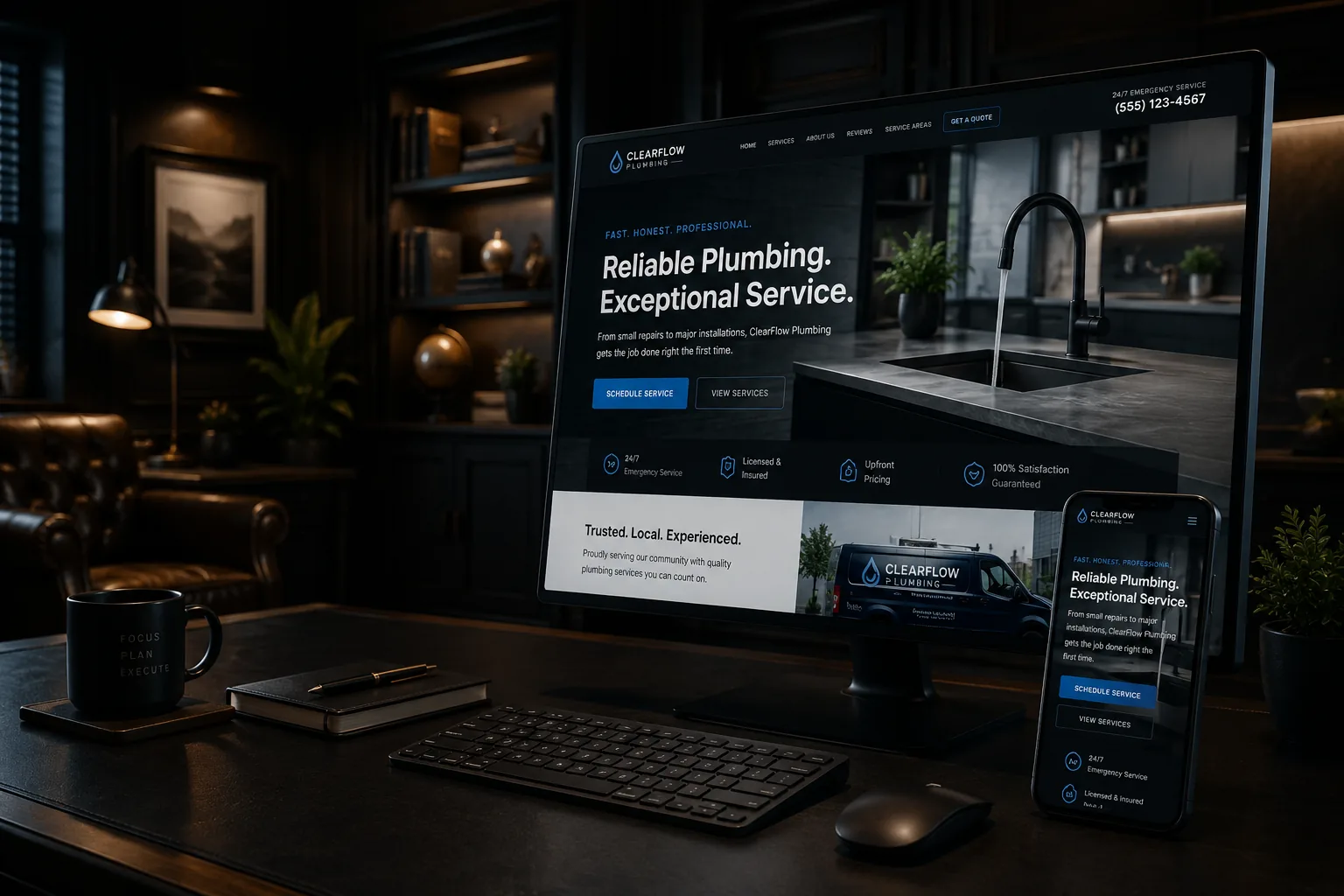
A contractor website should do more than look nice. It should help people understand what you do, where you work, why they should trust you, and how to contact you when they are ready. That sounds simple, but a lot of contractor websites miss the basics. Some look outdated. Some are too vague. Some hide the phone number. Some have one short services page and expect Google to figure everything out.
If you are planning a new website or thinking about redesigning your current one, the goal should not be to build the flashiest site possible. The goal should be to build a website that helps real customers take the next step. For contractors and local service businesses, that usually means more calls, more quote requests, and better visibility in local search.
A Clear Homepage That Explains What You Do
Your homepage is usually the first impression people get of your business. Within a few seconds, a visitor should know what service you provide and where you provide it. This is where many contractor websites fall short. A homepage should not make people guess. It should not lead with vague language like 'quality solutions for your home' or 'trusted service you can count on' without explaining the actual service.
A strong contractor homepage should clearly answer: What do you do? Who do you help? Where do you work? Why should someone trust you? What should they do next?
For example, a painting contractor might say: 'Interior and exterior painting services for homeowners and businesses in Concord, NH and surrounding towns.' That is simple, but it works. It tells the visitor what the company does, who they serve, and where they work.
Your homepage should also give people a quick path to your main services, reviews, project photos, service area information, and contact options. It should not be a wall of text, but it should give enough information for someone to feel like they are in the right place.
Dedicated Service Pages
Every important service you offer should have its own page. A lot of contractor websites have one general 'Services' page with a short list of everything they do. That may be okay for a small brochure site, but it is not ideal if you want your website to bring in leads from Google.
People search for specific services. They search for things like bathroom remodeling, exterior painting, lawn cleanup, rodent control, deck building, roof repair, junk removal, electrical panel upgrades, driveway sealing, and kitchen remodeling. If each of those services is only mentioned in a bullet list, your website may not have enough depth to compete in search results.
A good service page should explain the service clearly, answer common customer questions, show related photos when possible, mention your service area naturally, and give people a clear way to contact you. For example, instead of one page that says 'We offer landscaping,' a landscaping company could have separate pages for spring cleanup, fall cleanup, lawn care, mulch installation, hardscaping, and snow removal. That helps both the customer and Google understand what the business actually offers.
Service Area Pages
Contractors depend on local searches. People are not just searching for 'plumber' or 'electrician.' They are searching for help near them. They may search by town, region, county, or 'near me.' That is why service area information matters. Your website should clearly show where you work. This can include your main city, surrounding towns, counties, or regions. For a New Hampshire contractor, that may mean mentioning places like Concord, Manchester, Nashua, the Lakes Region, southern NH, or other areas you actively serve.
A weak service area page is just a copy-and-paste page where only the town name changes. That does not help the visitor much, and it can make the website feel thin. A better service area page explains the services you provide in that area, the type of customers you help, common project needs, nearby communities you serve, and how someone can request an estimate.
Customer Reviews and Testimonials
Reviews matter because hiring a contractor is a trust-based decision. People want to know that you do good work, show up when you say you will, communicate clearly, and treat customers well. Your website should make that trust visible. A contractor website should include customer reviews on the homepage, service pages, and contact page when possible.
Strong reviews can help answer concerns before someone reaches out. They can show that you are reliable, professional, easy to work with, good at communication, clean and respectful on job sites, skilled at your trade, and worth recommending. If you have Google reviews, consider highlighting a few of them on your website. You can also include project-specific testimonials when they match the page.
Real Photos of Your Work
Photos are one of the most important parts of a contractor website. People want to see what you actually do. They want proof. They want examples. They want to picture what it would be like to hire you. Real photos almost always work better than stock photos. They do not have to be perfect. They just need to be real, clear, and useful.
Depending on your trade, you may want to show finished projects, before and after photos, job site photos, detail shots, equipment, trucks, team members, work in progress, and materials or products you use. A website with real project photos feels more trustworthy than one filled with generic images that could belong to anyone.
Simple Contact Forms
Your contact form should make it easy for someone to reach out. Many contractor websites make the form too long or confusing. If someone has to answer too many questions before they can submit, they may leave. A good contractor contact form usually asks for: name, phone number, email address, town or service location, service needed, and a short project description. That is usually enough to start the conversation.
The form should also be easy to find. It should be on the contact page, but it can also appear on important service pages or near the bottom of the homepage. After someone submits the form, make sure the next step is clear. A simple confirmation message can help, such as: 'Thanks for reaching out. We will review your message and get back to you as soon as possible.'
Click-to-Call Buttons
For contractors, phone calls still matter. Many customers do not want to fill out a form. They want to tap a button and call, especially if the job is urgent or they have a quick question. Your website should make that easy. On mobile, your phone number should be clickable. A visitor should be able to tap once and call you.
This is especially important for trades like plumbing, electrical, HVAC, pest control, junk removal, roofing, and repair services where customers may be looking for fast help. Do not make people copy and paste your phone number. Do not hide it in a paragraph. Make calling you simple.
A Mobile-Friendly Layout
Most people looking for a contractor are using their phone. They may be sitting in their truck, standing in their kitchen, walking around a property, or searching after work from the couch. Your website needs to work well on a small screen. A website can look good on a desktop and still perform poorly on mobile -- and that is a serious problem because mobile visitors are often ready to take action.
A mobile-friendly contractor website should have readable text, easy-to-tap buttons, simple navigation, fast-loading images, clear contact options, click-to-call functionality, service pages that are easy to scan, and no sideways scrolling. Good mobile design removes friction. It helps people find what they need and contact you without getting frustrated.
Fast Load Speed
A slow website can cost you leads. People do not want to wait for a contractor website to load. If your homepage takes too long, they may leave before they even see your services. Website speed can be affected by oversized images, poor hosting, too many plugins, old themes, heavy scripts, background videos, unoptimized website builders, and cluttered design.
For a contractor, the website does not need to be complicated. It needs to be fast, clean, and easy to use. Fast load speed also matters for local SEO. Search engines want to send people to websites that provide a good experience. If your site is slow, especially on mobile, that can hurt your overall user experience and your rankings.
A Strong Connection to Your Google Business Profile
Your website and Google Business Profile should work together. For many contractors, the Google Business Profile is one of the most important sources of local visibility. It is what can help you appear in Google Maps and local search results. But your website still matters.
Your website should support the services and locations listed on your Google Business Profile. If your profile says you offer bathroom remodeling, deck building, or pest control, your website should have clear pages that explain those services. Your Google Business Profile helps people find you. Your website helps them trust you. When both are working together, your online presence is much stronger.
Clear Navigation
Your website navigation should not feel like a maze. Visitors should be able to quickly find your services, service areas, project photos, reviews, and contact information. For most contractor websites, the main menu should be simple -- Home, About, Services, Service Areas, Projects or Gallery, Reviews, and Contact. Avoid using creative menu labels that people have to interpret. Simple navigation helps people find answers faster.
Trust-Building About Page
The About page should not just be a biography. It should help people feel comfortable hiring you. For local contractors, people often want to know who they are dealing with -- how long you have been in business, what areas you serve, what kind of work you focus on, and what makes your company different. A strong About page can include your background, experience, values, service area, photos of the owner or team, and why customers choose you. People hire people. A good About page can make your business feel more approachable and trustworthy.
Frequently Asked Questions
An FAQ section is helpful for both customers and SEO. Customers often have questions before they reach out. If your website answers those questions clearly, they may feel more confident contacting you. Common contractor FAQ topics include: Do you offer free estimates? What areas do you serve? Are you licensed and insured? How soon can you start? Do you handle residential and commercial work? What types of projects do you specialize in? FAQs also give you a natural way to include helpful search-friendly content without forcing keywords into the page.
A Clear Call to Action on Every Important Page
Every major page should guide the visitor toward the next step. If someone reads your service page and is interested, what should they do? Call? Fill out a form? Request an estimate? Make it clear. Good calls to action for contractor websites include: Request an estimate, Call today, Ask about your project, Schedule a consultation, Get a quote, Send us a message.
The CTA should match how your business actually works. If you usually start with a phone conversation, make the phone number obvious. If you prefer form submissions, make the form simple. If you need photos before quoting, tell people that. Do not leave people wondering what to do next.
A Website Built Around Real Customer Questions
The best contractor websites are not built around what the business wants to say. They are built around what the customer needs to know before reaching out. That includes questions about services, pricing, timing, process, service areas, trust, photos, and expectations. When your website answers those questions clearly, it becomes more than an online brochure. It becomes a tool that helps people choose you.
This is also where blog content can help. A contractor blog can answer questions like: How much does this type of project cost? How do I know when I need this service? What should I ask before hiring a contractor? What affects the timeline? Helpful content can bring in search traffic, build trust, and support your main service pages.
A Contractor Website Should Make It Easy to Choose You
A good contractor website does not need to be complicated. It needs to be clear, useful, mobile-friendly, and built around the way real customers make decisions. At minimum, your website should include a clear homepage, dedicated service pages, service area information, customer reviews, real project photos, simple contact forms, click-to-call buttons, mobile-friendly design, fast load speed, a strong connection to your Google Business Profile, and clear calls to action.
When those pieces are missing, your website may still exist, but it may not be helping your business grow. When those pieces work together, your website can do a better job of helping people find you, trust you, and contact you. If you are planning a new contractor website or wondering whether your current site is missing important pieces, TechDad Technology can help you build a clear, mobile-friendly website that supports local visibility and real customer leads.