
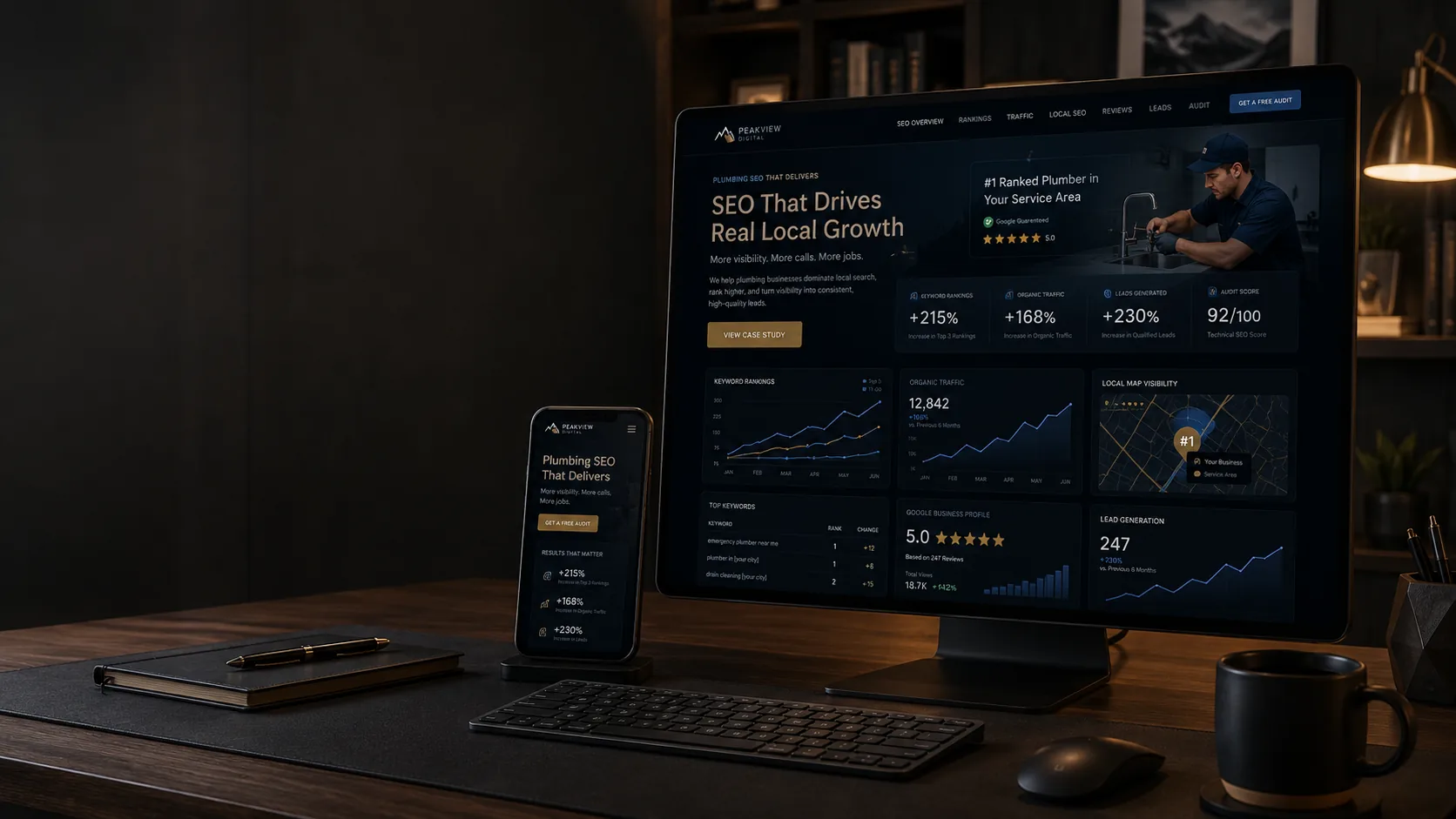
A useful quarterly scorecard shows whether customers can find accurate information, reach the important pages, trust what they see, and become qualified leads. It keeps website, search, Google Business Profile, social media, and AI visibility separate enough to understand while tying them back to the same business outcomes.
Begin with the business changes
Before looking at a chart, record what changed during the quarter. Note new services, staffing, weather, seasonality, service-area changes, holiday hours, tracking repairs, website releases, and advertising. A roofing company should not compare winter and storm season as if demand stayed the same.
Use the same date range and a sensible comparison period. Keep the underlying counts beside percentages. A 100 percent increase can mean two inquiries instead of one.
Website: can people complete the job?
Review uptime, mobile use, accessibility, speed, contact forms, phone links, and the pages responsible for important services. Record failed test leads and fixes. Traffic growth means little if the form sends requests to an abandoned inbox.
Search and Business Profile: are the right facts visible?
For organic search, review indexed priority pages, useful non-branded query groups, landing-page activity, and qualified contacts. For the Business Profile, check ownership, name, category, address or service area, hours, reviews, replies, calls, and website actions.
Don't treat one manual Google search as a ranking report. Local results vary, and Search Console reports the website rather than every map appearance. Use several pieces of evidence and note their limits.
Social and AI: report what you can actually verify
For social media, compare original content themes, meaningful saves and replies, profile actions, website visits, response time, and qualified messages. Keep platform definitions separate. A view on one platform may not mean the same thing on another. For a deeper reporting method, see social media metrics that matter to a local service business.
For AI visibility, use the Search Console generative AI report and appearing-page information when available. Google's report can show impressions, pages, countries, devices for Search, and dates. It is not a complete record of every prompt, mention, or lead. No outside company can guarantee a citation or claim access to Google's internal AI systems.
An illustrative quarterly decision
Suppose a roofer sees more visits to storm-repair pages, stronger Google Profile activity, and several qualified calls after a wind event. Social posts about temporary protection also earned useful saves. At the same time, the contact form failed one monthly test and the financing page still shows an old term.
The quarter shouldn't end with a single score of 82. It should end with actions: repair and retest the form, update the financing information, expand the strongest storm-repair answer, and keep the helpful post format ready for the next weather event.
Leave with no more than five commitments
Give each action an owner, deadline, expected signal, and review date. Mark missing or unreliable data instead of hiding it in a polished dashboard. Keep the scorecard understandable enough that the owner can question any number.
Keep the report small enough to use. One page of decisions with supporting detail is more valuable than a deck nobody revisits. Store the source links and exports so the next quarter can reproduce the comparison instead of rebuilding it from screenshots.
Quarterly local SEO reporting should help you decide what to protect, improve, test, or stop. You can use the guides on writing clear service pages, AI-agent website readiness, and structured-data accuracy to plan specific improvements. If your reports list activity but never make the next move clear, TechDad Technology can help you build a practical scorecard during a free strategy call.
Sources
- Google Search Central: Optimizing your website for generative AI features - https://developers.google.com/search/docs/fundamentals/ai-optimization-guide
- Google Search Central: Introducing Search Generative AI performance reports - https://developers.google.com/search/blog/2026/06/gen-ai-performance-reports
- Google Search Central: Creating helpful, reliable, people-first content - https://developers.google.com/search/docs/fundamentals/creating-helpful-content
- Google Search Central: Search Essentials - https://developers.google.com/search/docs/essentials